

Abhyanga in Ayurveda: The Ancient Oil Massage Ritual for Deep Healing, Stress Relief, and Longevity
magine ending your day with warm herbal oil slowly melting tension out of your muscles while your mind shifts from chaos to calm. That’s the essence of Abhyanga, one of Ayurveda’s most treasured healing rituals. In today’s world of burnout, screen fatigue, anxiety, poor sleep, and overstimulation, this ancient oil massage practice feels less like a luxury and more like a survival tool. While modern wellness trends come and go faster than social media algorithms change, Abhyanga has remained relevant for thousands of years because it addresses something fundamental: the human nervous system’s need for grounding, warmth, and nourishment.
Ayurveda describes Abhyanga as far more than a massage. It is a therapeutic practice designed to balance the doshas, improve circulation, strengthen tissues, lubricate joints, calm the mind, and support longevity. Traditionally performed with warm herbal oils, Abhyanga is considered part of Dinacharya, the Ayurvedic daily routine meant to maintain health before disease develops. Ancient Ayurvedic texts praise it for promoting strength, youthful skin, better sleep, emotional stability, and resilience against stress. Interestingly, modern research is beginning to support many of these traditional claims, especially in areas involving stress reduction, circulation, and nervous system regulation.
People often think wellness requires expensive supplements, biohacking gadgets, or extreme detox programs. Ayurveda takes a surprisingly different approach. It says healing can begin with simple, repetitive rituals that reconnect us with the body. Abhyanga is exactly that kind of ritual. It teaches the body to feel safe again. And when the body feels safe, healing becomes easier.
What Is Abhyanga in Ayurveda?
The word Abhyanga comes from Sanskrit and translates roughly to “oil massage” or “application of oil to the limbs.” In Ayurvedic medicine, it refers to a synchronized or self-administered massage using warm oils infused with herbs chosen according to a person’s dosha and health condition. This isn’t just about relaxation at a spa. Traditional Abhyanga is deeply therapeutic and often prescribed as part of broader Ayurvedic healing protocols.
Ayurveda views oil as nourishment for the nervous system. Think about how dry earth cracks without water. Ayurveda believes the human body behaves similarly under stress, overwork, irregular routines, excessive travel, poor sleep, and emotional overload. These experiences increase Vata dosha, the energy associated with movement, dryness, instability, and nervous system imbalance. Abhyanga counteracts this by introducing warmth, heaviness, steadiness, and lubrication back into the body.
One fascinating aspect of Abhyanga is its emphasis on touch as medicine. In many cultures, touch has become increasingly absent from daily life. Yet science consistently shows that therapeutic touch influences hormones, circulation, mood, and even immune function. Research published in complementary medicine journals has explored how Ayurvedic Abhyanga may significantly reduce subjective stress levels after just one session. The calming effect is not imagined; it’s physiological.
Traditional Ayurvedic practitioners also believe Abhyanga improves the flow of prana, or life-force energy, through the body’s channels. Whether viewed spiritually or biologically, many people report feeling more grounded, mentally clear, emotionally stable, and physically relaxed after regular practice. It’s almost like pressing a reset button for the body and mind.
Ayurvedic Principles Behind Abhyanga
To truly understand Abhyanga, you need to understand the Ayurvedic concept of the three doshas: Vata, Pitta, and Kapha. These doshas are energetic forces that govern physical and psychological processes within the body. Ayurveda teaches that health exists when these doshas remain balanced according to an individual’s natural constitution.
How Abhyanga Balances Vata
Abhyanga is especially famous for calming Vata dosha, which governs movement, the nervous system, circulation, breathing, and mental activity. Vata becomes aggravated through stress, excessive thinking, cold weather, irregular eating, excessive exercise, travel, and lack of sleep. Sound familiar? Modern life practically manufactures Vata imbalance.
When Vata rises excessively, symptoms may include:
Anxiety
Dry skin
Constipation
Insomnia
Joint cracking
Nervous exhaustion
Muscle tension
Brain fog
Warm oil massage acts almost like a grounding blanket for the nervous system. Sesame oil, the most commonly used Abhyanga oil, has warming, heavy, and nourishing properties that directly oppose Vata’s dry and erratic qualities. Ayurveda calls this principle “like increases like, opposites balance.”
Effects on Pitta and Kapha
Although Abhyanga is best known for Vata, it also influences Pitta and Kapha. Cooling oils like coconut can help calm inflammatory Pitta conditions such as irritability, skin sensitivity, or overheating. Stimulating oils with warming herbs may support sluggish Kapha conditions involving stagnation, heaviness, or lethargy.
This personalized approach is one reason Ayurveda remains unique. The same oil massage is not prescribed identically to everyone. Two people may have headaches for entirely different doshic reasons, and therefore receive different oils and techniques.
Traditional Oils Used in Abhyanga
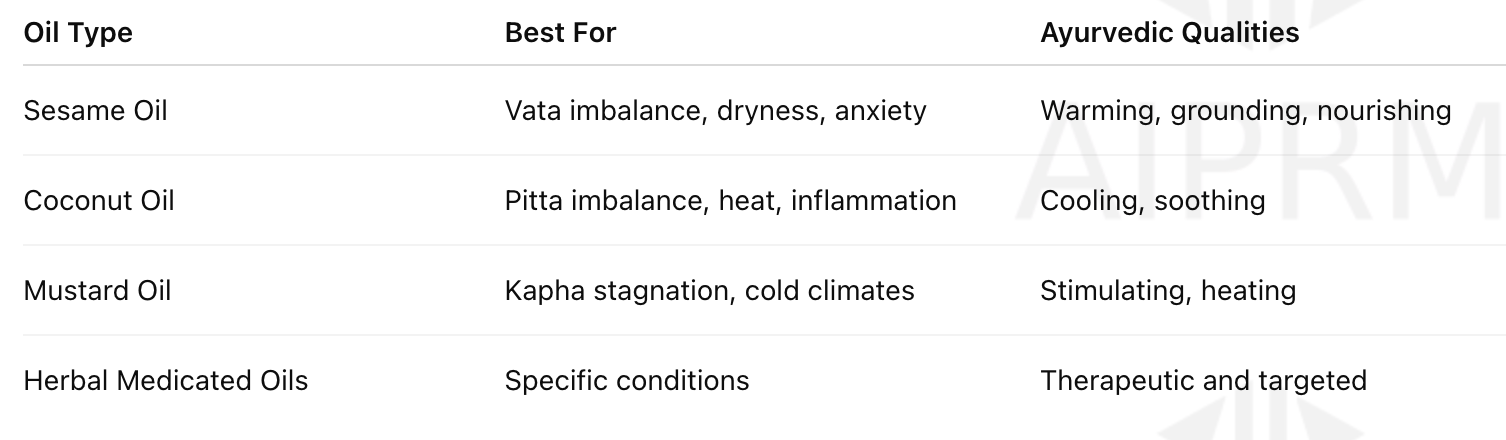
Oil selection in Ayurveda is incredibly intentional. Oils are chosen based on climate, constitution, season, age, and specific imbalances. This customization transforms Abhyanga from a simple massage into targeted medicine.
Sesame Oil
Sesame oil is considered the gold standard for Abhyanga. Ayurveda praises it for its ability to penetrate deeply into tissues and strengthen the body. It’s rich, warming, and ideal for people dealing with stress, fatigue, dry skin, or nervous system imbalance.
Coconut Oil
In tropical climates or for people with excess Pitta, coconut oil provides cooling relief. It’s especially beneficial during summer or for inflammatory skin conditions.
Herbal Oils
Classical Ayurvedic formulations like Mahanarayan oil, Dhanwantharam oil, and Bala Ashwagandha oil combine sesame oil with medicinal herbs to address joint pain, muscle weakness, postpartum recovery, or nervous system disorders.
Top Benefits of Abhyanga Massage
The popularity of Abhyanga today is no accident. People are rediscovering how powerful simple rituals can be when practiced consistently.
Stress and Nervous System Support
One of the strongest modern research areas surrounding massage therapy involves stress reduction. A pilot study investigating Ayurvedic Abhyanga found notable reductions in subjective stress experiences after treatment. Warm oil combined with rhythmic touch appears to regulate the parasympathetic nervous system, shifting the body out of “fight or flight” mode.
Think about your nervous system like an overstimulated phone constantly running too many apps. Abhyanga helps close those tabs. It slows the mental noise.
Skin Nourishment and Anti-Aging
Ayurveda views the skin as a reflection of internal health. Abhyanga deeply moisturizes tissues, improves circulation, and supports healthy skin aging. Massage may also improve skin blood flow and elasticity.
People often notice:
Softer skin
Reduced dryness
Improved glow
Better texture
Enhanced elasticity
Joint and Muscle Relief
Warm oil penetrates muscles and joints, helping relieve stiffness and tension. Traditional Ayurvedic texts recommend Abhyanga for athletes, older adults, and individuals with degenerative conditions.
Recent discussions on wellness forums show users reporting reduced neck tension, improved flexibility, and decreased muscle tightness after regular practice.
Improved Sleep and Mental Clarity
People struggling with insomnia frequently describe Abhyanga as deeply sedating for the mind. Evening self-massage can create a ritual that signals safety and rest to the nervous system.
Many users practicing Abhyanga consistently report:
Better sleep quality
Reduced anxiety
Improved emotional resilience
Enhanced focus
Scientific Research on Abhyanga
Ayurveda is ancient, but interest in scientifically studying these practices is growing rapidly. Researchers are increasingly examining how massage affects the nervous system, stress hormones, circulation, and brain function.
A 2026 review exploring massage therapies found improvements in anxiety, depression, fatigue, and psychosocial symptoms in women experiencing menopause. While not exclusive to Abhyanga, these findings align with Ayurvedic claims about massage regulating the nervous system and emotional wellbeing.
Neuroimaging studies published in 2026 also suggest massage may influence neuroplasticity and brain activity through measurable neurological mechanisms. This is fascinating because Ayurveda has long described Abhyanga as nourishing both body and mind simultaneously.
Research still remains limited specifically for Ayurvedic Abhyanga, but the overlap between traditional knowledge and emerging science is becoming harder to ignore.
How to Perform Abhyanga at Home
One of the best things about Abhyanga is that you don’t need a luxury spa to practice it. Traditional Ayurveda actually encourages self-massage at home as part of daily life.
Step-by-Step Abhyanga Routine
Warm your chosen oil slightly.
Sit in a warm room.
Begin with the scalp using circular motions.
Massage long strokes over limbs.
Use circular movements around joints.
Spend extra time on feet and ears.
Allow oil to absorb for 15–20 minutes.
Take a warm shower or bath afterward.
The entire ritual can take anywhere from 10 minutes to an hour. Consistency matters more than perfection.
Best Time for Abhyanga
Morning Abhyanga energizes and protects the nervous system throughout the day. Evening Abhyanga promotes deep sleep and relaxation.
Autumn and winter are traditionally considered the best seasons for oil massage because Vata naturally increases during cold, dry weather.
Who Should Avoid Abhyanga?
Despite its many benefits, Abhyanga is not appropriate for every condition. Ayurveda generally advises caution during:
Acute fever
Severe congestion
Heavy ama (toxicity)
Active infections
Indigestion
Certain inflammatory skin conditions
Some Ayurvedic practitioners also recommend avoiding Abhyanga immediately after large meals.
Discussions within Ayurvedic communities frequently mention concerns about using heavy oils during periods of high Kapha or ama accumulation. This is why individualized guidance remains important.
Abhyanga for Modern Lifestyle Disorders
Modern health issues often mirror classical Vata disorders described in Ayurveda. Chronic stress, excessive screen exposure, irregular schedules, sleep disruption, anxiety, digestive disturbances, and burnout all reflect nervous system dysregulation.
Abhyanga offers something modern culture desperately lacks: intentional slowing down.
A Reddit user recently shared how combining warm food, regular sleep, and Abhyanga significantly improved anxiety, bloating, dry skin, and constipation within weeks. Stories like these are becoming increasingly common as people search for holistic alternatives to constant overstimulation.
This doesn’t mean Abhyanga replaces medical care. But it can become a powerful supportive practice that restores body awareness and nervous system resilience.
Professional Ayurvedic Abhyanga vs Self-Massage
Professional Ayurvedic Abhyanga treatments are often synchronized by two therapists using medicated oils selected after assessing your dosha. These sessions may include steam therapy, herbal treatments, and Panchakarma procedures.
Self-Abhyanga, however, offers something equally powerful: daily consistency. It transforms healing from an occasional event into a ritual woven into everyday life.
Many people discover that even a short 10-minute oil massage creates noticeable shifts in mood, sleep, energy, and skin health over time. Like watering a plant regularly instead of flooding it once a month, small consistent rituals often work best.
Conclusion
Abhyanga remains one of Ayurveda’s most profound healing practices because it addresses the body on multiple levels at once. It nourishes tissues, calms the nervous system, improves circulation, supports joints, softens the skin, and encourages emotional grounding in a world that constantly pulls attention outward.
What makes Abhyanga especially powerful today is its simplicity. You don’t need expensive technology or complicated wellness routines to begin. Warm oil, mindful touch, and consistency can profoundly change how the body responds to stress.
Ancient Ayurvedic physicians understood something modern science is now rediscovering: healing often begins when the nervous system feels safe. Abhyanga creates that feeling through warmth, rhythm, nourishment, and intentional care. That’s why this ancient ritual continues to thrive thousands of years later.
FAQs About Abhyanga
1. How often should I do Abhyanga?
Ayurveda traditionally recommends daily Abhyanga, especially for Vata types. Even 2–3 times weekly can provide noticeable benefits.
2. Which oil is best for Abhyanga?
Sesame oil is the most commonly recommended oil due to its warming and grounding properties. Coconut oil is preferred for excess heat or Pitta imbalance.
3. Can Abhyanga help anxiety?
Many people report reduced anxiety and better emotional balance after regular Abhyanga. Early studies also suggest stress-reducing effects.
4. Should Abhyanga be done before or after a shower?
Traditionally, Abhyanga is performed before a warm bath or shower so the oil can penetrate the skin before excess oil is removed.
5. Is Abhyanga scientifically proven?
Research on Ayurvedic Abhyanga is still developing, but massage therapy studies increasingly support benefits involving stress reduction, circulation, sleep, and nervous system regulation.