
Ayurveda vs TCM: Two Ancient Systems, One Goal | 阿育吠陀与中医:两大古老体系,一个共同目标
Ayurveda vs TCM: Two Ancient Systems, One Goal
For over 5,000 years, two of humanity's most sophisticated healing systems have evolved in parallel — Ayurveda in the Indian subcontinent and Traditional Chinese Medicine (TCM) in East Asia. Both originated from a deep observation of nature, both understood that the human body is a microcosm of the universe, and both recognized that health is not merely the absence of disease but a state of dynamic balance.
For the Hong Kong reader — living in a city where TCM is woven into the cultural fabric — understanding Ayurveda through the lens of TCM can be a powerful bridge. You already intuitively grasp concepts like qi (氣), yin and yang (陰陽), and the five elements (五行). Ayurveda offers a parallel framework that is at once familiar and refreshingly different, adding new tools to your wellness toolkit.
THE FOUNDATIONAL PARALLEL: ENERGY, ELEMENTS, AND BALANCE
Both systems rest on the understanding that the body is governed by vital energy. In TCM, this is qi (氣), the life force that animates all living things. In Ayurveda, the equivalent is prana (प्राण), the vital breath that circulates through the body's channels (nadis, नाडी), much like qi flows through the meridians (經絡).
Both systems also use a five-element framework, though their classifications differ:
TCM Five Elements (五行)Ayurveda Pancha Mahabhuta (五大元素)Wood (木)— (absorbed into Air/Ether)Fire (火)Fire (Agni, अग्नि)Earth (土)Earth (Prithvi, पृथ्वी)Metal (金)— (absorbed into Air/Ether)Water (水)Water (Ap/Jala, आप/जल)—Air (Vayu, वायु)—Ether/Space (Akasha, आकाश)
The TCM five elements are organized around seasonal cycles and generational relationships (相生相剋). Ayurveda's five elements are more fundamental — they are the building blocks of all matter, including the three doshas (tri-dosha, त्रिदोष), which are the biological humors that govern physiology.
THE DOSHAS AND THE TCM ORGAN SYSTEMS
This is where the comparison becomes clinically interesting.
Ayurveda categorizes every individual into one of three constitutional types — Vata (वात), Pitta(पित्त), and Kapha (कफ) — based on the predominance of elements:
Vata (Air + Ether): governs movement, the nervous system, circulation, elimination. Its qualities are dry, light, cold, mobile, and subtle.
Pitta (Fire + Water): governs transformation, digestion, metabolism, body temperature, and cognitive processing. Its qualities are hot, sharp, oily, light, and spreading.
Kapha (Earth + Water): governs structure, lubrication, immunity, and tissue building. Its qualities are heavy, slow, cold, oily, smooth, and stable.
TCM does not use a tri-dosha system per se, but it recognizes organ system pairs (臟腑) and constitution types (體質) that map loosely:
Vata corresponds closely to the TCM concept of Liver qi stagnation and blood deficiency — dryness, nervousness, poor circulation, and irregular movement.
Pitta parallels the TCM patterns of Liver fire rising, heart fire, and stomach heat — inflammation, irritability, acid reflux, and skin eruptions.
Kapha aligns with spleen qi deficiency and dampness (濕) — sluggishness, weight gain, fluid retention, and congestion.
Understanding your Ayurvedic dosha can give a TCM practitioner — or a patient familiar with TCM — a new vocabulary for what they're already observing. It doesn't replace TCM; it complements it.
DIGESTION: AGNI AND THE SPLEEN-STOMACH AXIS
Both systems place extraordinary emphasis on digestion as the root of health.
In Ayurveda, the digestive fire — agni (अग्नि) — is the gateway to wellness. When agni is strong, food is properly metabolized into the seven dhatus (七種組織, the body tissues). When agni is weak or erratic, it produces ama (आम), a toxic residue that accumulates in the channels and causes disease.
In TCM, the spleen and stomach (脾胃) together form the digestive axis. The spleen transforms food into qi and blood, while the stomach receives and breaks down food. When the spleen is deficient, it cannot extract nutrients, leading to qi deficiency, blood deficiency, and eventually dampness (濕) — which is strikingly similar to Ayurveda's concept of ama.
The Ayurvedic concept of agni is more nuanced in one specific way: it identifies four states of agni — sama (balanced), tikshna (sharp/excessive, seen in Pitta types), manda (weak, seen in Kapha types), and vishama (irregular, seen in Vata types).
TREATMENT MODALITIES: HERBS, DIET, AND LIFESTYLE
Both systems use herbs, dietary therapy, and lifestyle modifications as primary treatments. Here, the overlap is remarkable:
Herbs with parallel uses:
Ashwagandha (Withania somnifera) and Ren Shen (人參, Ginseng) — both adaptogens for building qi/prana, strengthening immunity, and combating exhaustion.
Turmeric (Curcuma longa, हरिद्रा) and Jiang Huang (薑黃) — both used to reduce inflammation, support liver function, and improve circulation.
Triphala (त्रिफला) and TCM laxative formulas containing Da Huang (大黃, rhubarb) — both address elimination, though Triphala is gentler and tonifying.
Brahmi (Bacopa monnieri) and Yuan Zhi (遠志, polygala) — both calm the mind, support memory, and nourish the nervous system.
Dietary therapy: Both systems classify foods by energetic properties rather than macronutrients. Ayurveda uses the six tastes and Virya (heating or cooling potency). TCM uses the four natures and five flavors. The practical recommendations are often strikingly similar.
Lifestyle: Both emphasize daily routines — Ayurveda's dinacharya (दिनचर्या) parallels TCM's "yang sheng" (養生) tradition of nourishing life.
WHERE AYURVEDA ADDS SOMETHING NEW
The dosha framework for self-understanding: Ayurveda's three-dosha system is more accessible for self-assessment than TCM constitution types.
Abhyanga (oil massage): Ayurveda's systematic use of warm medicated oils for daily self-massage is distinctive, with profound effects on the nervous system.
Rasayana (rejuvenation therapy): Ayurveda has a highly developed branch for rejuvenation and longevity with specific protocols for different life stages.
Panchakarma (detoxification): Ayurveda's five-fold purification therapy offers a structured approach to deep detoxification.
WHERE TCM HOLDS ITS OWN
Acupuncture and moxibustion: TCM's meridian-based needling has no direct Ayurvedic equivalent.
Herbal formula complexity: TCM's classical formulas (經方) are extraordinarily sophisticated multi-herb combinations.
Integration with Hong Kong healthcare: TCM is licensed and regulated in Hong Kong. Ayurveda is newer and still building its infrastructure.
THE BOTTOM LINE: COMPLEMENTARY, NOT COMPETING
If you've grown up with TCM, you don't need to choose. The two systems share a common philosophical DNA — the understanding that the body is an interconnected whole, that nature holds the medicine, and that balance is the definition of health.
For Hong Kong's stressed, fast-paced population — where digestive issues, burnout, sleep disorders, and skin conditions are rampant — having both systems available gives you a richer toolkit. Understanding your Ayurvedic dosha can help you make better daily choices, while TCM remains available for acute treatment and culturally familiar care.
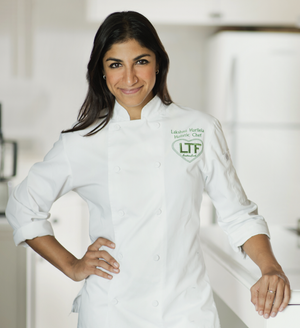
Curious about your dosha? Book a consultation with Lakshmi Harilela at Ayurveda Hong Kong to discover your constitution and receive a personalized Ayurvedic plan that works alongside — not against — your TCM knowledge.
阿育吠陀与中医:两大古老体系,一个共同目标
五千多年来,人类最精妙的两大疗法体系一直在平行发展——印度阿育吠陀与东亚中医。两者都源于对自然的深刻观察,都将人体视为宇宙的缩影,都认识到健康不仅仅是无病状态,而是一种动态平衡。
对于香港读者而言——生活在一个中医已融入文化基因的城市——通过中医的视角来理解阿育吠陀,可以成为一座强大的桥梁。您已经直觉地理解气、阴阳和五行等概念。阿育吠陀提供了一个平行的框架,既熟悉又令人耳目一新,为您的健康工具箱增添新工具。
基础平行:能量、元素与平衡
两大体系都建立在身体由生命能量掌管的认知之上。中医称之为气,是赋予万物生命的力量。阿育吠陀中对应的是prana(प्राण),即通过身体通道(nadi,नाडी)循环的生命之息,如同气通过经络运行。
三体质与中医脏腑系统
阿育吠陀将每个人归入三种体质类型之一——Vata(वात)、Pitta(पित्त)和Kapha(कफ):
Vata(风+空):掌管运动、神经系统、循环和排泄。特质为干、轻、冷、流动。
Pitta(火+水):掌管转化、消化、代谢和体温。特质为热、锐、油、轻。
Kapha(土+水):掌管结构、润滑和免疫。特质为重、缓、冷、油、稳。
消化:AGNI与脾胃轴
阿育吠陀认为消化之火——agni(अग्नि)——是健康的关键。当agni强健时,食物被正确代谢为七种组织。当agni虚弱时,会产生ama(आम)毒素。中医的脾胃轴与之类似——脾虚则无法吸收营养,最终产生湿,与ama概念惊人相似。
治疗手段:草药、饮食与生活方式
两大体系都使用草药、饮食疗法和生活方式调整作为主要治疗手段:
Ashwagandha与人参——都是增强气/prana的适应原。
姜黄在两大体系中都用于消炎和护肝。
Triphala与中医含大黄的方剂——都处理排泄,但Triphala更温和且滋补。
Brahmi与远志——都安神、增强记忆。
阿育吠陀的独特贡献
体质自测框架:三体质系统比中医体质分型更易自行评估。
Abhyanga(油按摩):系统使用温热药油进行日常自我按摩,对神经系统效果深远。
Rasayana(回春疗法):针对不同生命阶段和体质的系统性回春方案。
Panchakarma(排毒):五重净化疗法提供结构化的深度排毒方案。
中医的独特优势
针灸与艾灸:基于经络的针刺疗法在阿育吠陀中无直接对应。
方剂复杂度:中医经方的多药组合架构极为精密。
与香港医疗体系的整合:中医在香港已获发牌监管,阿育吠陀仍在建设中。
结论:互补而非竞争
如果您在中医文化中长大,您无需做出选择。两大体系共享相同的哲学基因——人体是相互联系的整体,自然蕴含药方,平衡即是健康。
对于香港高压快节奏的人群——消化问题、倦怠、失眠和皮肤问题普遍——同时拥有两大体系意味着更丰富的工具箱。了解您的阿育吠陀体质可以帮助您做出更好的日常选择,而中医则可用于急性治疗和文化上熟悉的护理。
想了解您的体质类型?预约咨询香港阿育吠陀的Lakshmi Harilela,发现您的体质并获得个性化阿育吠陀方案——与您的中医知识相辅相成。